Reggio di Calabria (Calabria)
The city lies at the foot of the Aspromonte, at the far end of the Italian peninsula on the right shore of the Strait of Messina.
Of ancient origins (founded by Calchis, Greek settlers, in the 8th century BC), it became Roman at the beginning of the 3rd century AD, and of increasing importance as a municipium in Augustan times.
After the fall of the Empire, it was conquered by the Goths, followed by the Byzantines and Saracens.
It was taken by Robert Guiscard in 1059 and then followed the fortunes, first of the Kingdom of Sicily and then the Kingdoms of Naples and the Two Sicilies, until joined to Italy in 1860.
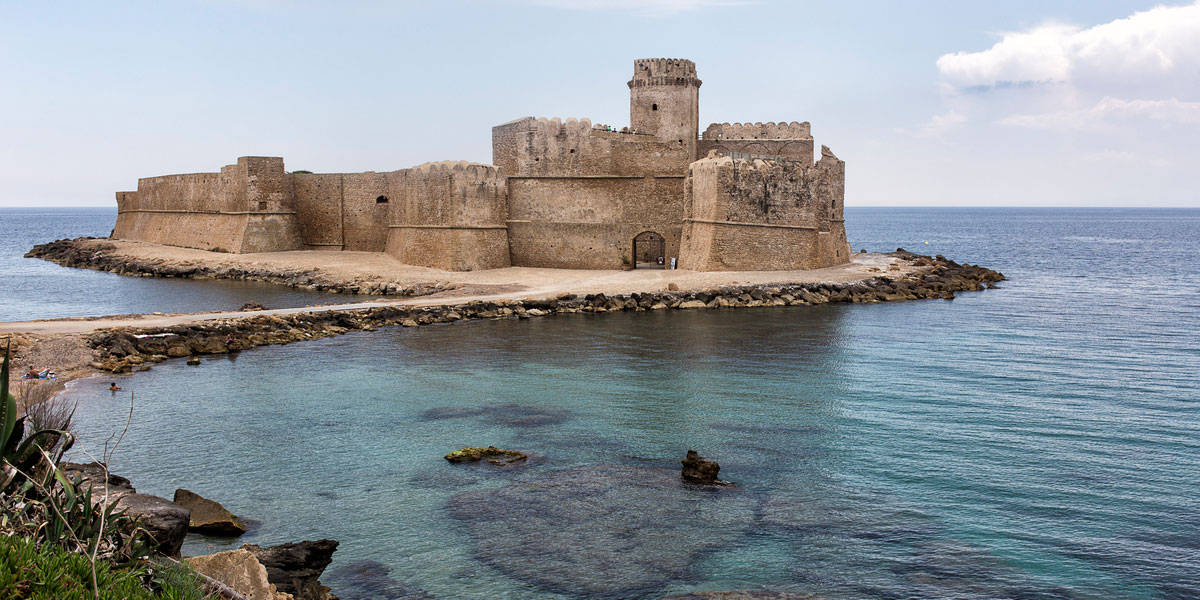
In 1908, Reggio di Calabria was destroyed by a dreadful earthquake, and later rebuilt using anti-sismic criteria, to an orthogonal plan. Practically all the monuments in the city were totally destroyed; however, those worth visiting are the Duomo, rebuilt in Romanesque style, with interesting works of art; the partly ruined Castle, of medieval origin; the church of the Ottimati; the Madonna dell’Eremo Sanctuary.
A most interesting place is the Lungomare Matteotti(the promenade), with its vegetation and several Greek and Roman remains, described by D’Annunzio as ‘the most beautiful kilometre in Italy’.
The economy of Reggio is based essentially on commercial activities related to trade in local agricultural produce (particularly citrus fruit), though it also has a busy port.
Employment in the public sector associated with administrative bodies whose headquarters are located in the city is of considerable importance, as its position as a tourist resort.
The industrial sector, however, is still underdeveloped and consists of factories processing agricultural products (essences, oil), together with several paper mills, and textile, engineering and construction material manufacturers.